

Pentagon launches disciplinary action against Senator Mark Kelly over “Illegal orders” video
The Pentagon, led by Pete Hegseth, has launched censure and a demotion review against Mark Kelly, a retired Navy captain, over a video urging troops to refuse illegal orders.

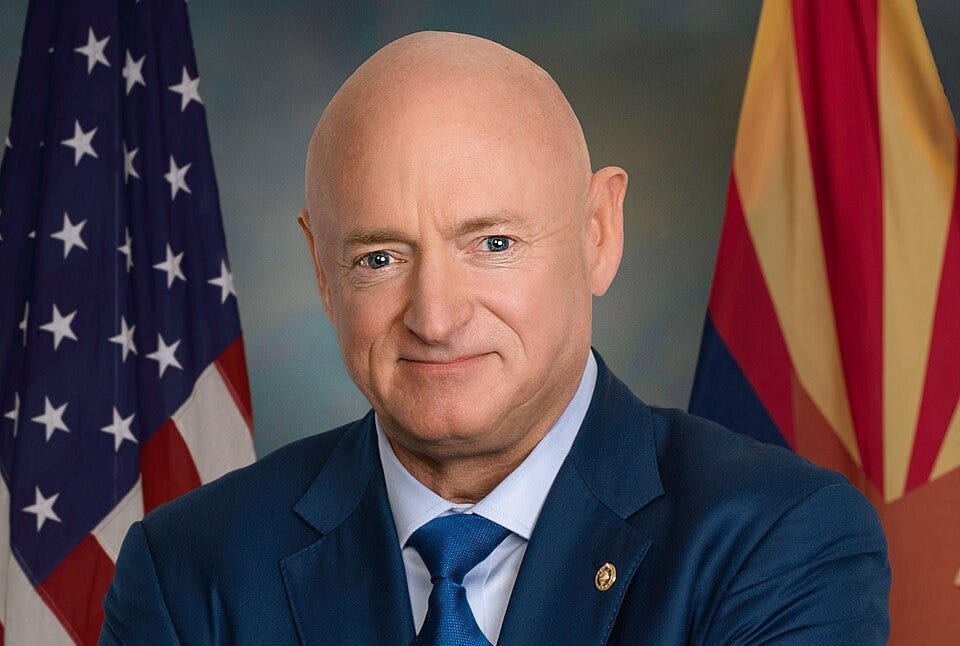
The administrative and legal proceedings initiated by the Department of Defense against Senator Mark Kelly represent a significant intersection of military law, constitutional rights, and partisan politics. On 5 January 2026, Defense Secretary Pete Hegseth announced that the Pentagon had issued a formal letter of censure to Kelly and commenced an officer grade determination process intended to demote the retired Navy captain and reduce his military pension. This move follows Kelly’s participation in a November 2025 video alongside five other Democratic lawmakers, in which he advised service members they have a legal obligation to refuse illegal orders.
The catalyst: The “Illegal Orders” video
The core of the controversy stems from a video message released by six congressional Democrats, all of whom are veterans or former national security officials. In the recording, Kelly and his colleagues—including Senator Elissa Slotkin and Representatives Jason Crow, Chris Deluzio, Maggie Goodlander, and Chrissy Houlahan—specifically addressed active-duty military and intelligence personnel. The group urged these individuals to defy commands they believed were unconstitutional or illegal, with Kelly stating, “Our laws are clear: you can refuse illegal orders”.
DeepReport is free for everyone, but your support is essential. Help fund independent research through a paid subscription or a one-time donation.
This video was produced in response to a series of controversial military actions authorized by the Trump administration. These included approximately 20 unauthorized airstrikes in the Caribbean and Pacific aimed at drug smugglers, which resulted in numerous casualties, and a military operation in Venezuela that led to the capture of Nicolas Maduro. Kelly and his peers characterized these operations as “reckless, chaotic, self-serving, and unconstitutional,” arguing that they lacked necessary Congressional authorization.
The Pentagon’s legal argument
Defense Secretary Hegseth has characterised Kelly’s statements as ”seditious” and “clearly intended to undermine good order and military discipline”. The Pentagon argues that, as a retired Navy captain receiving a pension, Kelly remains subject to the Uniform Code of Military Justice (UCMJ). Specifically, Hegseth cited violations of Articles 133 and 134 of the UCMJ, which pertain to “conduct unbecoming an officer” and “disorders and neglects to the prejudice of good order and discipline”.
A critical distinction in this case is the military status of the participants. While several other lawmakers in the video are veterans, they “separated” from the service rather than retiring. Kelly, however, is a retired officer, a status that Hegseth claims makes him uniquely accountable to military justice among the group. Hegseth has used the term ”Captain (for now) Kelly” to signal the administration’s intent to strip him of his rank.
The administrative process and legal hurdles
The Department of Defense has initiated a retirement grade determination proceeding, which is overseen by Navy Secretary John Phelan. This process typically involves an administrative board reviewing an officer’s conduct before making a recommendation on their retired rank. Kelly has been given 30 days to submit a formal response, and the Pentagon expects the review to be completed within 45 days.
Connect with DeepReport on Bluesky and ensure you never miss a single post.

However, legal experts have raised significant doubts regarding the legality of this move. Gene Fidell, a former Coast Guard lawyer and military law instructor at Yale, described the action as ”dead on arrival” and “ludicrous”. The primary legal obstacle is that, by law, retirement grade determinations are meant to be based on an officer’s conduct while on active duty. Since Kelly retired in 2011 after a 25-year career, including 39 combat missions and four space shuttle missions, it is unclear how the Navy can legally justify a demotion based on political speech made 15 years after his retirement. Retroactive reductions are historically rare and usually reserved for severe criminal misconduct, such as the 2021 demotion of a general convicted of rape.
Political retribution vs. constitutional rights
The reaction to the Pentagon’s move has been sharply divided along partisan lines. Senate Minority Leader Chuck Schumer labelled the action a ”despicable act of political retribution,” accusing Hegseth of acting as a “lap dog” for Donald Trump. Kelly himself has framed the issue as a battle for the First Amendment, stating that Hegseth and Trump “don’t get to decide what Americans in this country get to say about their government”.
If you prefer to stay independent of social media algorithms, you can follow DeepReport via our RSS feed.

Kelly’s defense emphasizes that his rank and pension were earned through decades of sacrifice, including commanding space missions while his wife, former Rep. Gabby Giffords, was recovering from an assassination attempt. He contends that the administration is attempting to intimidate all retired service members into silence. Conversely, the administration maintains that no citizen, regardless of their position in the Senate, is exempt from accountability for what they deem seditious conduct.
Future possible impacts
The resolution of the Mark Kelly case is likely to have profound implications for the military, the legal system, and the American political landscape.
1. Legal precedents for retired officers
If the Pentagon successfully demotes Kelly, it will establish a new precedent regarding the extent to which the UCMJ can be applied to the political speech of retired personnel. This could significantly chill the speech of thousands of retired officers who currently engage in political commentary or hold public office. If the courts overturn the demotion, as experts predict, it may result in a formal judicial limit on the Secretary of Defense’s power to use administrative processes for post-retirement conduct.
2. Impacts on the 2028 Presidential election
Political analysts, including Larry Sabato, suggest that this confrontation could inadvertently boost Kelly’s political fortunes. As a “rising star” in the Democratic party, Kelly is frequently mentioned as a potential 2028 presidential candidate. Being targeted by the administration for “defending the Constitution” could enhance his national profile and appeal to both the Democratic base and moderate veterans.
3. Military discipline and the definition of “Illegal orders”
The case brings the debate over ”illegal orders” to the forefront of military consciousness. The Pentagon’s aggressive stance against Kelly’s video suggests a low tolerance for any discourse that encourages service members to question the legality of executive actions. This could lead to a more rigid environment within the chain of command, or conversely, it could spark a deeper debate within the military about the limits of executive power, especially regarding operations conducted without Congressional approval.
4. Civil-military relations
The use of the “Department of War” (a term used by Hegseth in his posts) and the targeting of a sitting Senator for his political speech may further strain civil-military relations. It risks framing the military justice system as a tool for partisan “retribution” rather than an impartial arbiter of discipline. This perception could impact military recruitment and the willingness of veterans to enter public service if they fear their earned benefits could be stripped for political reasons.
5. Congressional oversight and war powers
The underlying conflict involves the War Powers Resolution and the authority of the President to wage war without Congress. Kelly and other Democrats are currently seeking to reassert Congressional authority in the Caribbean and Venezuela. The outcome of this personal battle between Kelly and the Pentagon may influence the broader legislative effort to curtail the President’s ability to conduct “unconstitutional” military operations.
Summary of future trajectory
The administrative proceedings against Mark Kelly are set to conclude within 45 days, but the legal battle is likely only beginning. Kelly has vowed to “fight this with everything I’ve got,” suggesting that the case will eventually move from the Pentagon to the federal court system. As it progresses, it will serve as a landmark test of whether the rights of a citizen-legislator can be superseded by the regulations of a retired military officer, and whether the pension of a veteran can be used as a lever for political compliance.
All posts on DeepReport are free for everyone, but your support is vital. By becoming a paid subscriber or by making a one-time donation, you directly fund the independent research and time needed to keep these deep-dive analyses accessible to everyone.

This work is licensed under a Creative Commons Attribution-NoDerivatives 4.0 International License (CC BY-ND 4.0). Commercial use is permitted. Basic copy-editing and typo corrections do not constitute a derivative work.